Best Shower Chairs and Transfer Benches for Seniors in 2026
By Simon Peter Lokomo, MPH — Public Health
Last reviewed: July 2026
We don’t earn a commission on this page. Product assessments draw on occupational-therapist guidance and independent reviews, and we list the genuine drawbacks of each type.
The most important decision isn’t which brand, it’s which type. If your parent can’t safely step over the bathtub wall, they need a transfer bench, which straddles the tub with legs inside and outside. If they can get in fine but can’t stand long enough to shower, they need a shower chair, which sits entirely inside. Buying the wrong one is the most common and most frustrating mistake families make. Beyond that, look for a weight rating with real margin, non-slip feet, adjustable height, and armrests if balance is shaky.
Bathroom seating is one of the cheapest, highest-impact safety changes you can make. Usually well under the cost of a single grab-bar installation, and often the difference between someone bathing independently and someone avoiding bathing altogether. Here’s how to pick the first time correctly.
Transfer benches solve entry-and-exit problems. Shower chairs solve standing-endurance problems. Watch your parent get into the bathroom once and you’ll know which problem you have. If it’s both, the transfer bench covers both, because you can sit on it to shower as well.
What’s the difference between a shower chair and a transfer bench?
Where the legs sit and that changes everything about who it helps. A shower chair (or shower stool) sits wholly inside the tub or shower stall. The person still has to step in over the tub wall or threshold; once there, they have a stable seat. It’s the right tool when standing is the problem: fatigue, dizziness, poor endurance, breathlessness, recovering from surgery.
A transfer bench is wider and straddles the tub wall, with two legs outside the tub and two inside. The person sits down on the outside portion, then slides across to the inside. Never lifting a leg over the wall at all. It’s the right tool when the step-over is the problem: weak hips or knees, poor balance, limited range of motion, or anyone who has had a near-miss climbing into the bath. This is the option occupational therapists reach for most often, because the tub wall is where the highest-risk moment happens.
Which type should you buy?
Match it to the specific difficulty, not to the price tag. Here’s the quick comparison.
| Type | Solves | Best for | Watch out for |
|---|---|---|---|
| Transfer bench | Can’t step over the tub wall | Weak hips/knees, poor balance, tub bathrooms | Needs space outside the tub; shower curtain management |
| Shower chair with back & arms | Can’t stand long enough | Fatigue, dizziness, post-surgery recovery | Still requires stepping in; measure the stall |
| Backless shower stool | Just needs a seat | Small showers, fairly steady users | No back or arm support — less safe if balance is poor |
| Wall-mounted folding bench | Seating in a tight shower | Small walk-in showers, permanent solution | Requires professional installation into studs |
| Sliding / bariatric bench | Transfer plus higher weight support | Larger users, assisted transfers | Bulkier; higher cost |
| 3-in-1 commode chair | Shower seat + toilet + bedside use | Significant mobility limits | Institutional look; more to clean |
Which features actually matter?
Four things, and most buyers over-weight the wrong ones. Comfort features are nice; these are the ones that affect safety.
- Weight capacity with real margin. Common ratings run 300–400 lb, with bariatric models to 500–550 lb. Don’t buy to the exact number, leave headroom, because a seat gets loaded unevenly when someone drops onto it or pushes off an armrest.
- Non-slip feet, and a frame that won’t rust. Suction or rubber tips on all four legs; aluminum or coated steel, not bare steel.
- Adjustable height, in small increments. This matters more than people expect: the seat should let the person’s feet rest flat with knees at roughly a right angle. Good models adjust in half-inch steps.
- Armrests and a backrest, if balance is poor. Occupational therapists specifically recommend armrests for anyone unsteady or who struggles to stand from a seated position. A backless stool is fine for a steady person and a bad idea for a wobbly one.
One thing worth knowing, because it seems contradictory: suction feet on a shower chair are genuinely fine, even though suction grab bars aren’t safe for weight support. The difference is physics. A chair’s feet hold a stable, straight-down load spread across four points. A grab bar takes a sudden, angled yank from one point. Same suction technology, completely different demand, which is why one is trustworthy and the other isn’t.
The most common return reason isn’t quality, it’s fit. Measure the inside width of the tub or shower floor, the height of the tub wall, and for a transfer bench, the clear floor space outside the tub. A bench needs somewhere for those outer legs to stand, and in a cramped bathroom with the toilet close to the tub, it may not fit. Check before ordering, not after.
What to look for by category
These reflect what occupational therapists and independent reviewers consistently recommend in 2026. We haven’t hands-on tested them ourselves, so treat this as a shortlist to research rather than a lab verdict and confirm current pricing and specs with the retailer.
The standard transfer bench. The Drive Medical Tub Transfer Bench comes up repeatedly as the sensible default: aluminum frame, adjustable-height legs with suction tips, a reversible backrest so it works on a left- or right-hand tub, and tool-free assembly. Around a 350 lb capacity. It’s the model reviewers describe as what therapists reach for when price matters but quality can’t drop. Cons: basic padding, and the plastic seat is firm.
Transfer bench with better support. The Medline transfer bench range adds padded armrests and slip-resistant feet, with capacities commonly around 400 lb and push-button height adjustment; some versions include an antimicrobial seat treatment. Good pick if the person needs something to push up from. Cons: bulkier, and some users report a little flex under load.
Lightweight transfer bench. The Carex Tub Transfer Bench is easier to move in and out between uses, with a removable, reversible backrest and half-inch height steps across a range that fits most standard tubs. Around 300 lb. Cons: the lowest capacity of the group, check the margin.
Shower chair with back and arms. Medline and Drive Medical both make well-reviewed versions with backrest, padded or moulded armrests, suction-tip legs, and adjustable height, typically rated 350 lb. This is the right shape for someone who can step in but shouldn’t stand. Cons: takes up meaningful room in a small stall, measure first.
Heavy-duty / bariatric. Options rated 400–550 lb exist from brands including HOMLAND and KingPavonini, some as sliding transfer benches. Worth the extra outlay if the user is above roughly 250 lb, or if a caregiver assists the transfer. Cons: larger footprint, higher price.
Space-saving permanent seat. A wall-mounted folding teak bench (Clevr, EcoDecors and similar) folds nearly flat against the wall, excellent in a tight walk-in shower, and it looks like furniture rather than medical equipment, which genuinely matters to some people’s willingness to use it. Commonly rated around 400 lb. Cons: must be professionally installed into studs, and it’s not portable.
How do you pay for it? (There’s a useful shortcut)
Most of these are inexpensive enough to buy outright, but check your FSA or HSA first. Many shower chairs and transfer benches are FSA/HSA eligible, which means you can buy them with pre-tax dollars, effectively a discount. Some listings say so explicitly.
On insurance: original Medicare generally does not cover shower chairs or transfer benches, because bathroom safety equipment usually isn’t classed as durable medical equipment. However, some Medicare Advantage plans include home-safety benefits, and Medicaid HCBS waivers can cover bathroom equipment for those who qualify. If a doctor prescribes the equipment, the cost may also count toward the medical expense deduction. Please see whether home modifications are tax-deductible. For a small purchase, the FSA/HSA route is usually the easiest win.
What seating does NOT solve
- It isn’t a substitute for grab bars. Seating and properly mounted grab bars do different jobs, you need something to hold while sitting down and standing up. Install both.
- It doesn’t fix a slippery floor. Add a non-slip mat or treatment; the seat doesn’t help on the walk in and out.
- It won’t help if it’s the wrong type. A shower chair does nothing for someone who can’t get over the tub wall, that’s the mistake to avoid.
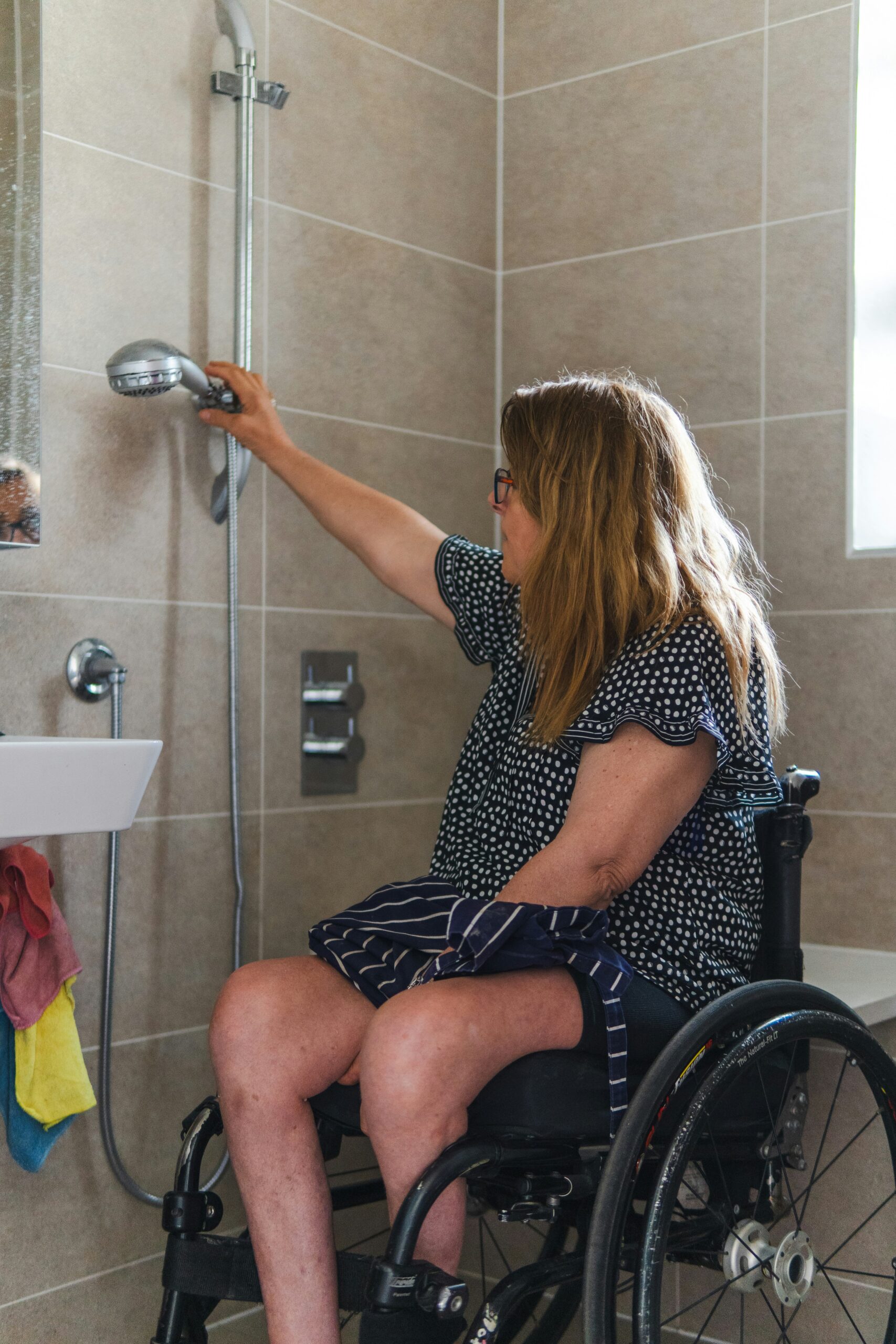
- It doesn’t replace a handheld showerhead. Seated bathing works far better with one; it’s a cheap add-on that makes the seat genuinely usable.
- It isn’t a fix for a fundamentally unsafe bathroom. If the layout doesn’t work, a tub-to-shower conversion may be the better long-term answer.
When to get help
An occupational therapist is genuinely worth it here. They’ll watch how the person actually moves, then specify the right type, height, and armrest setup, which is exactly where families guess wrong. Ask the doctor for a referral, especially after a hospital stay or surgery, when this equipment is most needed and an OT visit may already be part of the care plan. For the rest of the room, see our guide to bathroom safety modifications that actually work.
Key takeaways
- Transfer benches solve entry-and-exit problems; shower chairs solve standing-endurance problems. Pick by the problem, not the price.
- If in doubt, a transfer bench does both jobs, you can shower seated on it too.
- Prioritize weight capacity with margin, non-slip feet, small height adjustments, and armrests if balance is poor.
- Measure the tub interior, wall height, and the clear floor space outside the tub before ordering.
- Many models are FSA/HSA eligible; Medicare generally won’t cover them, but Medicaid waivers may. Pair seating with grab bars and a handheld showerhead.
Frequently asked questions
What’s the difference between a shower chair and a transfer bench?
A shower chair sits entirely inside the tub or shower and gives a stable seat to someone who can step in but can’t stand long enough to bathe. A transfer bench straddles the tub wall with legs both inside and outside, so the person sits down outside and slides across without lifting a leg over the wall. Benches are for entry-and-exit difficulty; chairs are for standing difficulty.
Which is better for an elderly parent, a shower chair or a transfer bench?
It depends on where the difficulty is. If stepping over the tub wall is the risky moment, choose a transfer bench. That’s the option occupational therapists most often recommend, because the tub wall is where falls happen. If they get in fine but tire or feel dizzy standing, a shower chair with a back and armrests is enough. A transfer bench can do both jobs if you’re unsure.
Does Medicare pay for a shower chair or transfer bench?
Generally no. Original Medicare doesn’t usually cover shower chairs or transfer benches, since bathroom safety equipment typically isn’t classed as durable medical equipment. Some Medicare Advantage plans offer home-safety benefits, and Medicaid HCBS waivers may cover it for those who qualify. Many models are FSA/HSA eligible, which is often the easiest way to save.
What weight capacity do I need in a shower chair?
Choose a rating comfortably above the user’s weight rather than close to it, since a seat gets loaded unevenly when someone drops onto it or pushes off an armrest. Standard models are commonly rated 300 to 400 pounds, and bariatric options run 500 to 550 pounds. If the user is above roughly 250 pounds, or a caregiver assists transfers, step up to a heavy-duty model.
Are suction cup feet on shower chairs safe?
Yes, unlike suction grab bars. A chair’s suction feet hold a stable, straight-down load spread across four legs, which suction handles well. A suction grab bar has to withstand a sudden, angled pull from a single point, which it often can’t. So suction feet on seating are fine, while suction grab bars shouldn’t be trusted for weight support.
HomeAgingGuide.com provides evidence-based information, not medical advice. Simon Peter Lokomo holds an MPH in public health and is not a licensed physician or occupational therapist. Equipment choice should suit the individual — an occupational therapist can specify the right type and height. Confirm current pricing, specifications, and weight ratings with the retailer before buying.