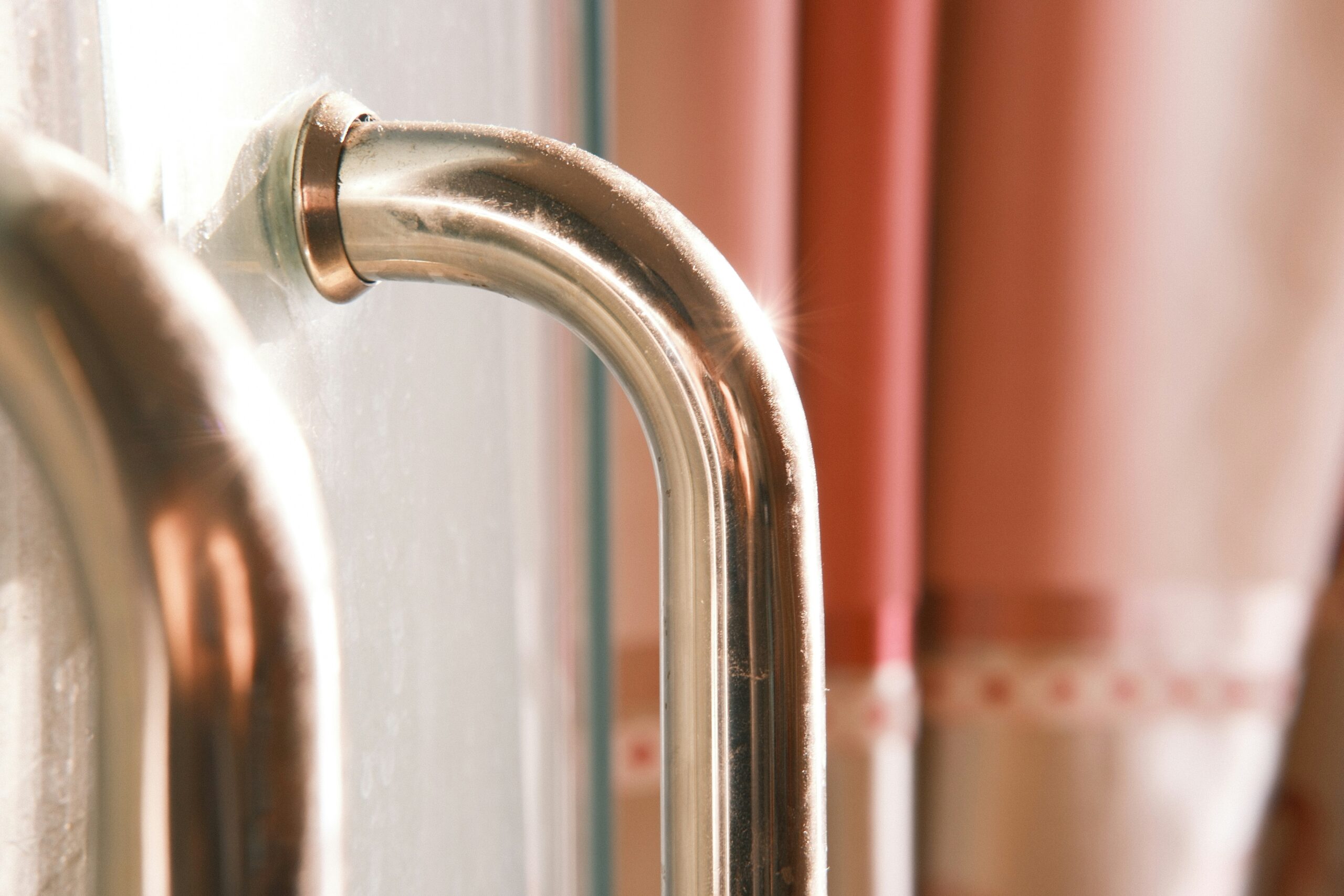
Are suction grab bars safe?
By Simon Peter Lokomo, MPH — Public Health
Last reviewed: July 2026
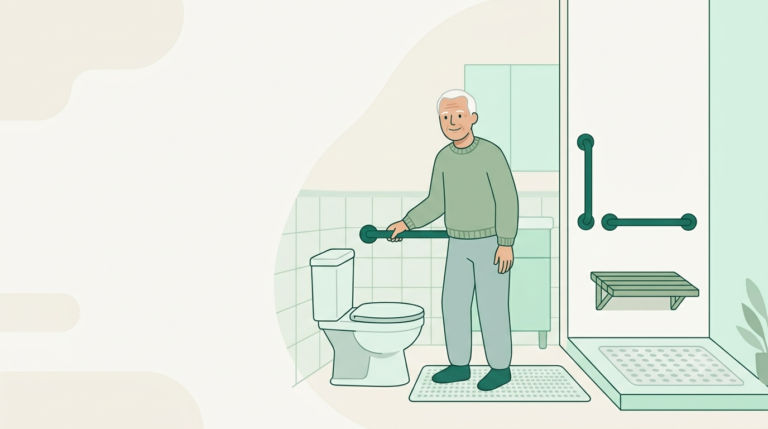
For balance, sometimes. For holding your weight in a fall, no. This is the distinction that matters, because getting it wrong can put someone on the bathroom floor. Suction grab bars stick to the wall with vacuum cups, not screws, so they can pop off without warning, especially on textured tile, or when heat and humidity weaken the seal. Occupational therapists and safety standards agree: use a suction bar only as a light balance aid on smooth, non-porous surfaces, and never as something you’d catch yourself on. For real fall protection, you need a bar bolted into the wall.
Suction grab bars are everywhere because they’re cheap, need no drilling, and look reassuringly solid. That last part is the danger. A device that feels secure when you test it gently can fail at the exact moment you throw your full weight on it. Here’s what the evidence says, where suction bars are genuinely fine to use, and what to install instead when safety actually matters.
Why are suction grab bars risky?
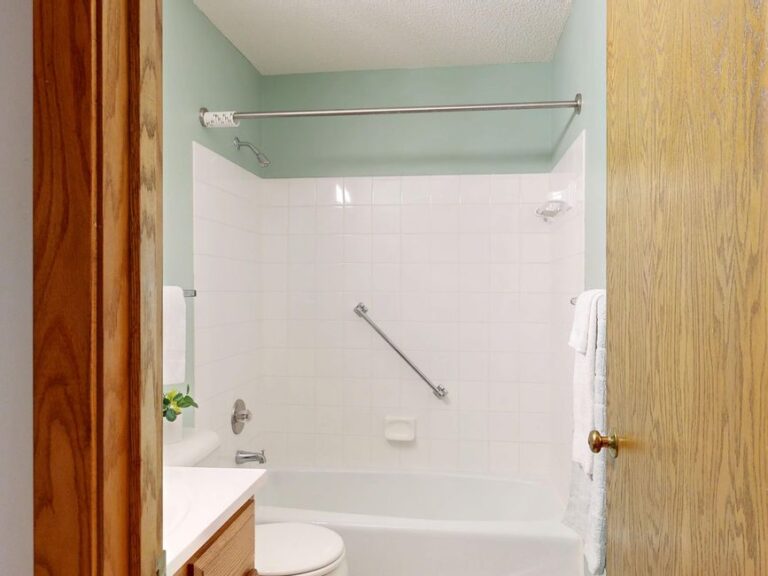
Because they hold with a vacuum seal, and a vacuum seal is only as good as the surface, the moisture, and the moment. A screwed-in bar fails only if the wall fails. A suction bar can fail for a dozen everyday reasons: textured or patterned tile, grout lines, natural stone, soap residue, steam, condensation, a temperature swing, or simply time, suction weakens on its own. The most dangerous part is that failure is often silent. Some models have a “locked” indicator window, but that window can still show green while the seal underneath is already letting go.
Then there’s the physics of a real fall, which is the number almost nobody checks. Manufacturers may advertise 200–400 pounds of capacity, but those figures come from perfect lab conditions with straight-down force. In an actual slip, you grab suddenly and at an angle, and that jerking, sideways load can exceed 500 pounds of force in an instant. That’s far beyond what a suction cup was ever going to hold, which is why safety specialists report suction bars popping off precisely when someone falls.
Never let a suction grab bar be the thing standing between your parent and the floor. If the plan is “they’ll grab it if they slip,” a suction bar is the wrong tool, it’s most likely to fail in exactly that scenario. Treat it as a steadying handhold at most, never as a fall-catcher.
Do suction grab bars meet safety standards?
No, and the gap is specific. The Americans with Disabilities Act standard for grab bars requires them to support at least 250 pounds of sustained force, mounted securely. Suction grab bars can’t meet this, which is why they are not ADA compliant and aren’t used in any setting where reliable weight-bearing support is required. When a hospital, care facility, or accessible public restroom installs grab bars, they’re bolted into the structure, never suctioned. That should tell you something about how professionals rate the two.
Is there any safe way to use a suction grab bar?
Yes, within strict limits, as a balance aid, not a lifeline. Used honestly, a suction bar can offer light steadying support for someone who’s reasonably stable and just wants a touch-point, in the right conditions. If you’re going to use one at all, follow every one of these:
- Smooth, non-porous surface only. Solid glossy tile or fiberglass, never textured tile, grout lines, stone, or anything with a pattern or seam under the cups.
- Clean and bone-dry before mounting. Any soap film or moisture ruins the seal.
- Tug-test before every single use. Pull hard in several directions each time, not just on installation day. The seal can fail between uses.
- Balance support only. Steadying yourself, not pulling yourself up, not lowering yourself down, not catching a fall.
- Best for the temporary. Travel, a hotel, a short rental, a brief recovery, situations where drilling isn’t possible and the user is fairly steady.
Even then, be honest about who’s using it. For someone who lives alone, a suction bar failing isn’t just a fall. It can mean a long wait on the floor before anyone knows. For anyone at real fall risk, skip the suction bar entirely.
What should you install instead?
Something anchored to the structure of the wall. Here are the reliable options, in order of how most homes should approach it.
| Option | Typical weight capacity | Best for |
|---|---|---|
| Bar screwed into wall studs | Up to ~500 lb | The gold standard — anyone needing real support |
| Bar with heavy-duty wall anchors (no stud) | ~250–300 lb | When a stud isn’t where you need the bar |
| Tension-mounted floor-to-ceiling pole | Up to ~300 lb | Renters or where drilling isn’t allowed |
| Shower chair or transfer bench | Varies (seated support) | Removing the need to stand while bathing at all |
| Suction bar | Not weight-bearing | Light balance only, smooth surfaces, temporary use |
A stud-mounted stainless-steel bar is the gold standard and often costs $30–$80 for the bar itself. Where a stud isn’t positioned where you need the bar, heavy-duty anchors rated for the load are a solid alternative. If you rent or can’t drill, a tension-mounted floor-to-ceiling pole gives real support without permanent holes. And sometimes the best answer isn’t a bar at all: a shower chair or transfer bench removes the need to stand while bathing, which eliminates the highest-risk moment entirely. (Interestingly, the suction cups on a shower chair’s feet work fine because they hold a stable seated weight straight down, not a sudden angled grab.)
Getting one installed and paid for
Professional installation of a mounted bar typically runs $100–$300 and buys you certainty that it’s anchored correctly, worth it if you’re not confident finding studs or the bathroom has awkward tile. Whoever installs it should locate the studs (or use load-rated anchors), then test the finished bar by pulling hard in several directions before anyone relies on it. On cost help: original Medicare generally won’t pay for grab bars, but some Medicare Advantage plans and, for those who qualify, Medicaid HCBS waivers can. We cover this in our guides to whether Medicare covers grab bars and whether Medicaid covers home modifications. For the whole room, see bathroom safety modifications that actually work.
What the evidence does NOT support
- That a suction grab bar can catch a fall. It can’t reliably, and it’s most likely to fail during the sudden, angled load of an actual slip.
- That advertised weight capacity means real-world safety. Those numbers come from ideal lab conditions; a fall can generate far more force than your body weight.
- That a “locked” indicator means it’s safe. The seal can be failing while the window still shows green.
- That cheaper and drill-free is a fair trade for a bathroom fall. The bathroom is the highest-risk room in the house; this is the wrong place to economize on reliability.
- That suction bars are useless. They’re fine as a light balance touch-point on smooth surfaces for a steady person, or for travel. Just never as weight-bearing support.
When to get help
If you’re not sure where a bar should go or how to anchor it safely, two people are worth it: a handyman or contractor experienced with grab bars, and for the bigger picture, an occupational therapist, who can assess the whole bathroom and place bars based on how the person actually moves, not just where there’s a convenient stud. Many will do a home safety assessment. If a parent is already unsteady in the bathroom or has had a near-miss, treat that as the signal to install proper support now, rather than trusting a suction bar to hold when it counts.
Key takeaways
- Suction grab bars are balance aids at most, never weight-bearing fall protection.
- They don’t meet the ADA 250-pound standard, and a real fall can exert 500+ pounds of angled force.
- They fail on textured tile, grout, and stone, and from heat, humidity, and time. Sometimes silently, even with a green “locked” indicator.
- For real support: a bar screwed into studs (up to ~500 lb), heavy-duty anchors, or a tension pole for renters. A shower chair removes the risk entirely.
- Use a suction bar only for light balance on smooth surfaces, for travel or temporary needs, and tug-test it before every use.
Frequently asked questions
Are suction grab bars safe for the elderly?
Only as a light balance aid on smooth, non-porous surfaces, not as weight-bearing support. For an older adult at any real fall risk, suction bars are not safe, because they can detach without warning during a slip. A grab bar screwed into wall studs is the safe choice; a tension pole is a good drill-free alternative for renters.
How much weight can a suction grab bar hold?
Manufacturers often advertise 200 to 400 pounds, but those figures assume perfect surfaces and straight-down force under lab conditions. In a real fall, sudden angled force can exceed 500 pounds, well beyond what a suction cup holds. In practical safety terms, a suction bar should be treated as having no reliable weight capacity for catching a fall.
Do suction grab bars fall off?
Yes, and often without warning. Heat, humidity, condensation, temperature changes, soap residue, textured tile, and simply time all weaken the vacuum seal. Some models have a “locked” indicator, but the seal can be failing while the window still shows green, which is why they can release at the worst possible moment.
What is the best alternative to a suction grab bar?
A grab bar screwed into wall studs is the gold standard, supporting up to about 500 pounds. If a stud isn’t available, heavy-duty wall anchors rated for the load work well. For renters or where drilling isn’t allowed, a tension-mounted floor-to-ceiling pole provides real support. A shower chair or transfer bench is another excellent option, since it removes the need to stand while bathing.
Are suction grab bars ADA compliant?
No. The ADA requires grab bars to support at least 250 pounds of force and be securely mounted, and suction grab bars cannot reliably meet this standard. That is why care facilities, hospitals, and accessible public restrooms use permanently installed bars rather than suction models.
HomeAgingGuide.com provides evidence-based information, not medical advice. Simon Peter Lokomo holds an MPH in public health and is not a licensed physician. Grab bar placement and installation should suit the individual and be anchored correctly — when in doubt, have a professional install and load-test it. I do not currently earn a commission on anything mentioned here, and I only recommend weight-bearing, properly mounted supports for fall protection.