Do Bifocal and Multifocal Glasses Increase Fall Risk? What Older Adults Need to Know
By Simon Peter Lokomo, MPH — Public Health
Last reviewed: July 2026
Do Bifocal and Multifocal Glasses Increase Fall Risk? What Older Adults Need to Know
Yes, and by more than most people expect. Older adults who wear bifocals, trifocals or varifocals are roughly twice as likely to fall as those wearing single-vision lenses, because looking down through the reading part of the lens blurs the ground at exactly the distance you need to judge a step or a curb. But the fix is not as simple as switching. A randomised trial found that giving people separate distance glasses cut falls substantially for those who regularly go out walking, and appeared to make things worse for those who rarely leave the house.
This is one of the most modifiable fall risks there is, and one of the least discussed. If someone in your family wears varifocals and has been tripping, it is worth an hour of your attention.
How do bifocals cause falls?
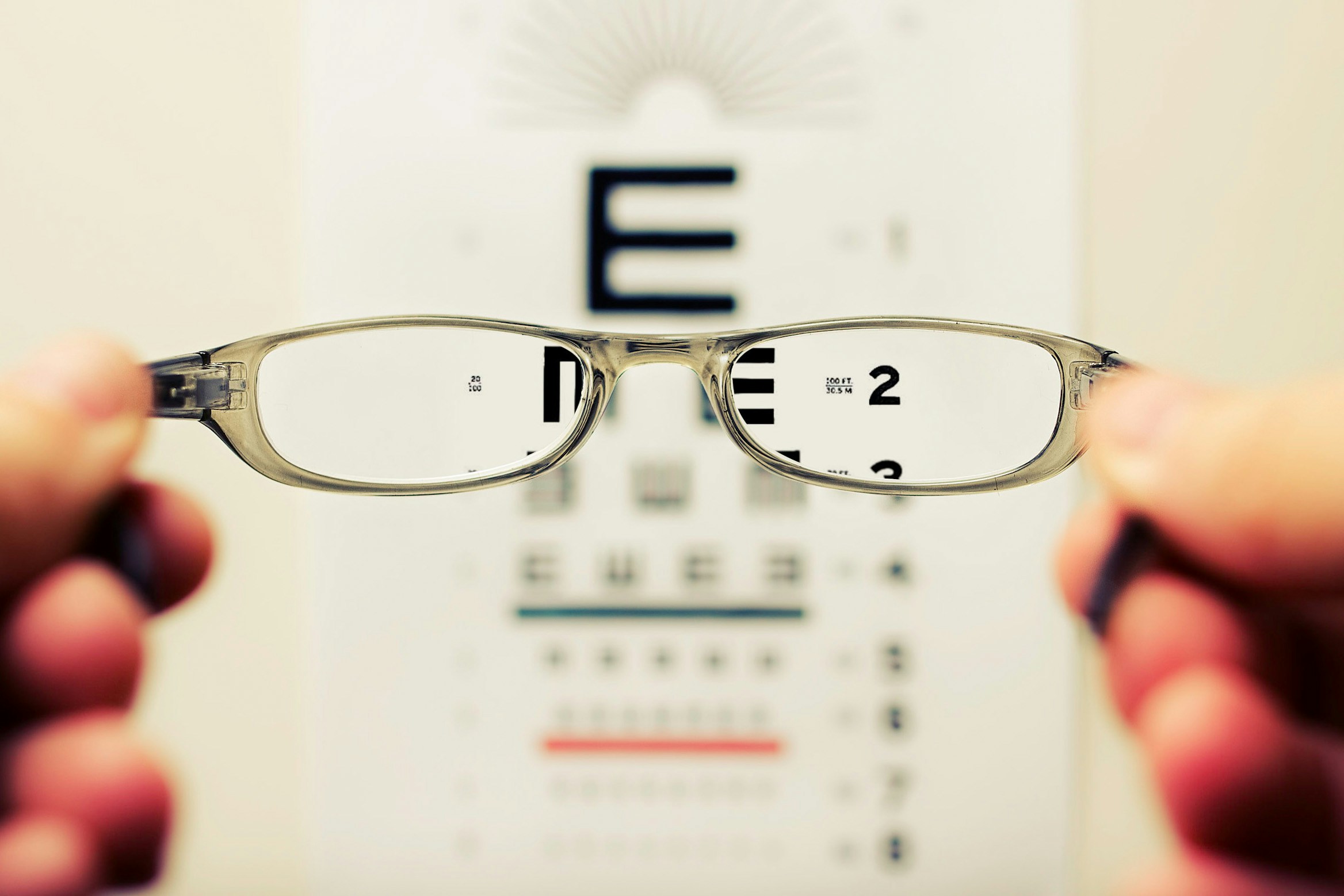
By blurring the ground precisely where you need to see it. It helps to picture what happens when you look down at a step. Your eyes drop, and the lower part of the lens comes into play. In single-vision glasses that lower part is corrected for distance, so the step stays sharp. In bifocals or varifocals, the lower segment is set for reading, roughly 12 to 16 inches away. The step, which is more like five feet from your eyes, is now viewed through a lens designed for a book.
Researchers measured this directly. When older adults were tested while looking through the lower segments of their glasses, they performed significantly worse on two things that matter enormously for walking: distant depth perception, and edge-contrast sensitivity, which is the ability to pick out the boundary of an object against its background. That is exactly the skill you use to see where a step ends and the floor begins.
The result is not that people cannot see. It is that they misjudge, by a small amount, where the ground is. On a flat familiar carpet that costs nothing. On a curb, an unfamiliar staircase or an uneven pavement, it costs a trip.
How much does fall risk actually increase?
A prospective study following community-dwelling adults aged 63 to 90 for a year found multifocal wearers were more than twice as likely to fall, with an odds ratio of 2.29, after adjusting for age, poor vision, and lower limb strength. The falls were not random either. Multifocal wearers were specifically more likely to fall from a trip, from a trip outside the home, and while walking up or down stairs, which is exactly the pattern you would predict from the mechanism.
One detail in that study is quietly persuasive. Among the participants who wore multifocals but chose to take them off when walking outside, fall risk was not elevated. When the same people stopped using the lenses in the risky situation, the risk went with them. That is not proof of cause, but it is the kind of pattern that makes a causal explanation more believable.
Multifocal lenses roughly double fall risk in older adults, and the falls cluster where you would expect: trips, outdoor trips, and stairs. The reason is mechanical rather than mysterious. Looking down through a reading segment blurs the ground at the distance where you judge a step. Importantly, this is a modifiable risk, unlike age or a diagnosis.
Are varifocals worse than bifocals?
The evidence points that way. A recent analysis comparing bifocal, trifocal and progressive addition lens wearers found that progressives, the varifocals with no visible line, were associated with a greater increase in fall risk than bifocals.
The likely reason is that progressives trade the visible line for a gradual change in power across the lens, and that gradient produces peripheral distortion, sometimes described as a swim effect, along with a wider zone where distant objects in the lower field are blurred. Bifocals have an abrupt line, which is visually cruder but at least predictable. Your brain learns where the boundary is.
This matters because varifocals are usually sold as the modern, superior option, and cosmetically they are. For someone at risk of falling, the cosmetic advantage may come at a cost worth discussing with an optometrist.
Should someone switch to single-vision glasses?
This is where it gets genuinely interesting, and where most articles on this subject go wrong. The obvious answer is yes. The trial evidence says it depends on how much they go out.
Researchers ran exactly this experiment. In the VISIBLE trial, 606 regular multifocal wearers with an average age of 80, all at increased fall risk, were randomly assigned either to receive single-lens distance glasses with advice to wear them for walking and outdoor activity, or to usual care. They were followed for 13 months.
Overall, the result was underwhelming. Falls fell by about 8 percent, which was not statistically significant. Had the researchers stopped there, the conclusion would have been that switching does not help.
The pre-planned subgroup analysis is what makes this trial valuable. Among participants who regularly took part in outdoor activities, the intervention reduced all falls substantially, with an incidence rate ratio of 0.60, meaning roughly a 40 percent reduction, along with fewer outdoor falls and fewer injurious falls. That is a large effect for a simple change.
But among participants with low levels of outdoor activity, there was a significant increase in outdoor falls. The authors were direct about it, concluding that the intervention is effective for multifocal wearers who take part in regular outdoor activities and may be harmful in those with low levels of outdoor activity.
Someone who rarely goes out spends most of their time in a home full of near-vision tasks, and distance-only glasses make those tasks harder. They also swap between two pairs less confidently, and get little of the outdoor benefit because they are seldom outdoors. The lesson is that this is a targeted intervention, not general advice. Never change someone’s glasses on the basis of an article, including this one. Take the question to an optometrist.
There is a catch with any new pair of glasses
Changing glasses carries a short term risk of its own, and it is worth knowing before you act on anything above. In one trial, older adults randomly assigned to a new pair of glasses reported significantly more falls and more fall related fractures than those who kept their existing pair. Related work found that people whose lens power changed substantially after cataract surgery had roughly double the rate of falls compared with those whose prescription changed little.
The explanation is the same mechanism this whole article turns on. Your brain learns to interpret the world through a particular lens, and it takes time to relearn when that lens changes. During the adaptation period, judgements about where the ground is are less reliable than they were before, even though the correction is technically better.
This does not undo the case for a separate distance pair. It does mean two things. Expect a settling in period of days to a few weeks, and be deliberately careful on stairs and curbs during it. And it gives one more reason why the trial’s targeting matters, since accepting an adaptation risk makes sense when there is a real benefit to gain outdoors, and much less sense for someone who rarely goes out.
Who is this worth doing for?
The trial gives a reasonably clear picture of who benefits.
| Situation | What the trial suggests |
|---|---|
| Goes out walking regularly, wears multifocals outdoors | Separate single-vision distance glasses for outdoors reduced falls substantially |
| Mostly indoors, rarely goes out | Switching may increase outdoor falls. Not advised |
| Wears progressives (varifocals) | Higher fall risk than bifocals. Worth raising with an optometrist |
| New to multifocals | Extra caution on stairs and curbs while adapting |
| Has already tripped on a step or curb | Ask specifically whether lenses contributed |
One practical finding from the trial is worth knowing before you start. Even with support and counseling, only about half the intervention group reported using their new distance glasses satisfactorily for most of the year. Managing two pairs is genuinely inconvenient, and if the second pair lives in a drawer it does nothing at all. If you do this, build a habit around it, keeping the distance pair by the front door and swapping as part of putting shoes on.
What else helps if switching is not right?
Plenty, and much of it is free. If separate glasses are not appropriate, or someone will not use them, the risk can still be reduced.
- Deliberate head movement on stairs. Encourage looking at steps by lowering the head rather than only dropping the eyes, so the step is viewed through the distance part of the lens. This is the single most useful habit, and it costs nothing.
- Slow down at transitions. Curbs, thresholds, the top and bottom step, and moving between indoors and outdoors are where the misjudgement bites.
- Improve contrast where it matters. Bright tape on step edges compensates directly for reduced edge-contrast sensitivity. Our home safety checklist covers this.
- More light. Contrast sensitivity worsens in dim conditions, which compounds the lens problem. This matters especially at night, as covered in nighttime bathroom trips.
- Keep the prescription current. An annual eye examination also catches cataract and macular problems, which affect contrast in their own right. If a parent has been avoiding stairs or going out less, that pattern can start with vision and end somewhere worse, as we cover in fear of falling in older adults.
- Handrails on both sides of stairs, which give a physical reference when the visual one is unreliable.
Vision is one of several modifiable fall risks, and it is worth checking alongside the others. Medication is the one most often missed, covered in medications that increase fall risk, hearing is another sensory risk that gets overlooked, covered in does hearing loss cause falls, and strength and balance work remains the intervention with the strongest evidence overall, in balance exercises for seniors.
Does cataract surgery reduce falls?
Possibly for the first eye, and the evidence is more conflicted than most articles admit. The encouraging result comes from a randomized trial of 306 women over 70 in England, who were assigned either to expedited cataract surgery within about four weeks or to a routine wait of twelve months. Over a year, the rate of falling was 34 percent lower in the operated group, a statistically significant difference. Confidence, anxiety, activity levels and visual disability all improved too.
Second eye surgery is a different picture. A companion trial of 239 women found a 32 percent reduction in fall rate, but the result was not statistically significant, and a later meta analysis reached the same conclusion, that first surgery reduces falls while second surgery does not show a significant effect.
Now the honest complication. Population studies disagree with the trials, sometimes sharply. One Western Australian study found that serious falls requiring hospital admission actually doubled after first eye surgery. And a large 2026 analysis of over a million Medicare beneficiaries found cataract surgery was not significantly associated with one year risk of falls or fractures.
How to hold all that together. Cataract surgery is clearly worth having when a cataract is impairing vision, for reasons that have nothing to do with falls. Treat any fall reduction as a plausible bonus rather than the reason to operate, expect the benefit if it comes to be from the first eye, and remember the adaptation point above, since a big change in prescription after surgery is exactly the situation where extra care on stairs is warranted for a few weeks.
Will Medicare pay for the eye exam or the glasses?
Mostly no, which surprises people. Original Medicare does not cover routine eye exams to update a prescription, and it does not cover eyeglasses or contact lenses. If you visit an optometrist simply to get new glasses, you pay the full cost.
There is one narrow exception worth knowing, because many people miss it. After cataract surgery that implants an intraocular lens, Part B covers one pair of standard eyeglasses or one set of contact lenses from a Medicare enrolled supplier, subject to the deductible and coinsurance. Part B also covers medically necessary eye care, including annual glaucoma screening for people at high risk, an annual dilated exam for people with diabetes, and treatment for macular degeneration.
For routine vision, the practical routes are a Medicare Advantage plan, many of which include an annual eye exam and an eyewear allowance, or a standalone vision plan. There is an uncomfortable logic here worth naming: the exam and the second pair of glasses that might reduce someone’s fall risk are generally not covered, while the hip fracture that follows a fall is. If cost is the barrier, our guide to ways to pay for aging in place covers the programs that sometimes help with related costs.
What the evidence does NOT support
- That everyone in multifocals should switch to single-vision lenses. The trial found benefit only for those regularly active outdoors, and possible harm for those who rarely go out.
- That switching glasses is a proven fall prevention measure in general. The overall trial result was not statistically significant. The benefit was in a subgroup.
- That multifocals are unsafe for everyone. They are a risk factor in older adults negotiating stairs and unfamiliar ground, not a hazard to all wearers in all situations.
- That you should stop wearing prescribed glasses. Poor vision is itself a fall risk. This is a conversation with an optometrist, not a decision to make alone.
- That buying a second pair is enough. Only around half the trial participants used their new glasses consistently. The habit is the hard part.
When to get help
Book an eye examination and raise falls explicitly, because optometrists do not always ask. Say that the person has tripped or feels unsure on steps, mention what lenses they currently wear, and ask directly whether a separate pair of single-vision distance glasses would be appropriate for walking and outdoor use. Be ready to describe how much they actually go out, since that is the factor the evidence turns on.
Ask about lens type as well. If they wear progressives and are at risk of falling, ask whether that is the best choice for them.
If falls have already happened, vision should be one part of a wider assessment covering medication, blood pressure, strength and balance. Our guide on what to do when a parent keeps falling sets out that process, and how to get up after a fall covers what to do when one happens.
If you are visiting a parent and trying to work out whether things have changed, difficulty on stairs is one of the more telling signs, and it is easy to attribute to age when the cause is a lens. Our guide to noticing decline when you visit covers what else to look for.
Key takeaways
- Older adults wearing multifocal lenses are roughly twice as likely to fall, particularly from trips and on stairs.
- The cause is mechanical: looking down through the reading segment blurs the ground at the distance you need to judge a step.
- Progressives appear to carry more risk than bifocals, probably due to peripheral distortion.
- A randomised trial found separate distance glasses cut falls by around 40 percent in people regularly active outdoors, but increased outdoor falls in those who rarely went out.
- If switching is not right, lower the head to look at steps, mark step edges, improve lighting, and keep the prescription current.
- Any new pair of glasses carries a short adaptation period during which falls become more likely, so take extra care on stairs for the first few weeks.
- Cataract surgery may reduce falls after the first eye, but the evidence conflicts. Have it for your vision and treat any fall benefit as a bonus.
Frequently asked questions
Do bifocals increase the risk of falling?
Yes. A prospective study of adults aged 63 to 90 found multifocal wearers were more than twice as likely to fall, with an odds ratio of 2.29 after adjustment. The falls clustered around trips, outdoor trips and stairs, because looking down through the reading segment blurs the ground at the distance needed to judge a step edge.
Are varifocals worse than bifocals for falls?
The evidence suggests so. An analysis comparing bifocal, trifocal and progressive addition lens wearers found progressives associated with a greater increase in fall risk than bifocals, likely because the gradual change in lens power creates peripheral distortion and a wider blurred zone in the lower visual field. It is worth raising with an optometrist if the wearer is at risk of falling.
Should older adults switch from bifocals to single-vision glasses?
Only for some people. A randomised trial found that providing separate single-vision distance glasses reduced falls by around 40 percent in multifocal wearers who regularly took part in outdoor activities, but produced a significant increase in outdoor falls among those with low outdoor activity. The overall trial result was not significant. Discuss it with an optometrist rather than switching independently.
Why do bifocals make stairs dangerous?
Because of where you look. Descending stairs, your eyes drop and you view the steps through the lower part of the lens, which in multifocals is set for reading distance of about 12 to 16 inches. A step roughly five feet away is therefore blurred, reducing depth perception and the ability to see the edge of the step against its background.
How can I reduce the risk without changing glasses?
Lower your head to look at steps rather than only dropping your eyes, so the step is seen through the distance portion of the lens. Slow down at curbs, thresholds and the top and bottom of stairs. Mark step edges with bright tape to compensate for reduced edge contrast, improve lighting, use handrails on both sides, and keep the prescription up to date with annual eye examinations.
Does cataract surgery reduce falls?
The evidence is mixed. A randomized trial of 306 women over 70 found that expedited first eye surgery cut the rate of falling by 34 percent compared with a twelve month wait. Second eye surgery showed a smaller effect that was not statistically significant. However, some population studies found the opposite, including one where serious falls doubled after first eye surgery, and a 2026 analysis of over a million Medicare beneficiaries found no significant association. Have the surgery for your vision, and treat any fall benefit as a bonus.
Can new glasses increase your risk of falling?
Yes, temporarily. In one trial, older adults given a new pair of glasses reported significantly more falls and fall related fractures than those who kept their existing pair, and people with large prescription changes after cataract surgery had around double the fall rate. Your brain needs time to relearn how to judge distance through a new lens, so take extra care on stairs and curbs for the first few weeks after any significant change.
Does Medicare cover eye exams and glasses?
Original Medicare does not cover routine eye exams for a glasses prescription, nor eyeglasses or contacts. The one exception is after cataract surgery with an intraocular lens implant, when Part B covers one pair of standard glasses or one set of contacts. Part B does cover medically necessary care, including annual glaucoma screening for high risk people and annual diabetic eye exams. Many Medicare Advantage plans include routine vision benefits.
Is poor vision or the wrong glasses a bigger fall risk?
Both matter, which is why stopping wearing glasses is not the answer. Uncorrected vision is itself an established fall risk, and conditions such as cataract reduce contrast sensitivity independently. The issue with multifocals is specific: the right correction in the wrong part of the visual field when walking. The solution is usually the correct lens for the task, decided with an optometrist.
HomeAgingGuide.com provides evidence-based information, not medical advice. Simon Peter Lokomo holds an MPH in public health and is not a licensed physician or optometrist. Never stop wearing or change prescribed glasses without professional advice, as uncorrected vision carries its own fall risk. Discuss lens choice with an optometrist who knows the person’s history and activity levels.