Are home modifications tax deductible?
By Simon Peter Lokomo, MPH — Public Health
Last reviewed: July 2026
Yes, medically necessary home modifications count as deductible medical expenses, and the IRS specifically lists grab bars, ramps, doorway widening, and stairway changes as fully deductible. But two rules stop most families from benefiting: you have to itemize instead of taking the standard deduction, and you can only deduct medical costs above 7.5% of your adjusted gross income. For many people, the honest answer is “technically yes, practically no.”
That’s not the answer most articles give, and it’s why families get their hopes up in March and find nothing in April. Below is how the deduction actually works, exactly which modifications the IRS treats as fully deductible, and the one timing strategy that decides whether this is worth anything to you.
Which home modifications does the IRS say are deductible?
The IRS treats medically necessary modifications as a capital expense and the general rule is that you can only deduct the amount by which the cost exceeds the increase in your home’s value. Install a $20,000 elevator that adds $15,000 to your home’s value, and only $5,000 counts.
But there’s a crucial exception, and it’s where nearly all aging-in-place work lands. IRS Publication 502 states that certain improvements made to accommodate a disability don’t usually increase the home’s value, so their full cost counts as a medical expense. The IRS lists them explicitly:
| Modification | IRS treatment |
|---|---|
| Entrance or exit ramps | Fully deductible |
| Widening doorways at entrances or exits | Fully deductible |
| Widening or modifying hallways and interior doorways | Fully deductible |
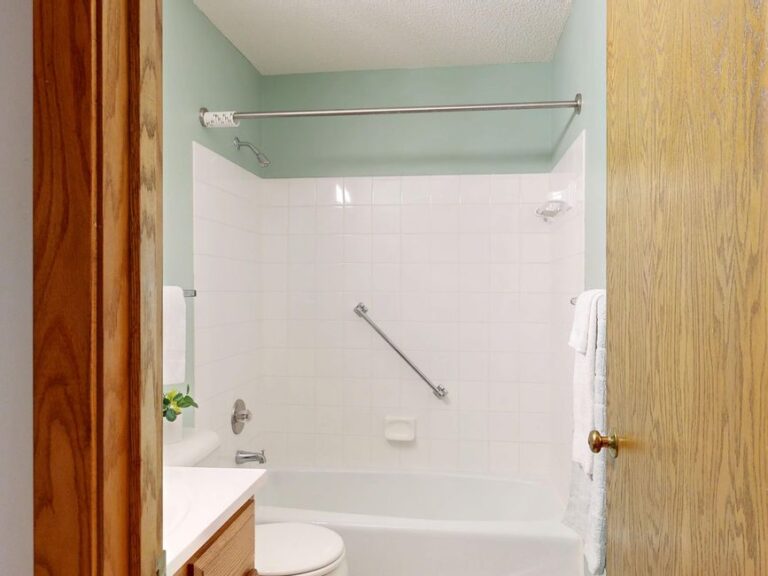
| Railings, support bars, or other bathroom modifications | Fully deductible |
| Handrails or grab bars — anywhere in the home | Fully deductible |
| Lowering or modifying kitchen cabinets and equipment | Fully deductible |
| Moving or modifying electrical outlets and fixtures | Fully deductible |
| Modifying stairways | Fully deductible |
| Modifying fire alarms, smoke detectors, warning systems | Fully deductible |
| Porch lifts and other lifts | Fully deductible |
| Elevators | Partial — generally add home value |
Two extras worth knowing. Operation and upkeep count too. The electricity to run a stair lift, or repairs to a ramp, qualify as medical expenses if the main reason is medical care, even if the original cost didn’t fully qualify. And renters aren’t excluded: amounts paid to buy and install special fixtures for a person with a disability in a rented home can count as medical expenses.
Most aging-in-place work such as grab bars, ramps, wider doorways, bathroom rails, stair modifications sits on the IRS’s fully deductible list. You don’t need an appraisal for these; the IRS presumes they don’t add home value. It’s the big-ticket items that add resale value, like elevators, where you must subtract the value increase and deduct only the rest.
Why can’t most people actually use this deduction?
Because two gates stand in front of it, and most families fail at least one.
Gate one: you must itemize. Medical expenses only count if you itemize on Schedule A instead of taking the standard deduction. For 2026 the standard deduction is roughly $16,100 (single), $32,200 (married filing jointly), or $24,150 (head of household). Your total itemized deductions e.g. medical, state and local taxes, mortgage interest, charitable giving, must beat that number, or itemizing gains you nothing. Since the 2017 tax law raised the standard deduction, only a small minority of taxpayers itemize at all.
Gate two: the 7.5% floor. Even if you itemize, you can only deduct medical expenses above 7.5% of your AGI. If your AGI is $80,000, the first $6,000 of medical spending is invisible. Spend $14,000 and you deduct $8,000, not $14,000.
If you take the standard deduction, as most households do, a $6,000 bathroom modification saves you nothing at all on your taxes. This deduction mainly helps people who already have high medical costs, itemize anyway, and are doing substantial work. Don’t let a contractor or a website talk you into spending more on the promise of a tax break you may never claim. Model the actual numbers with a tax professional first.
How do you calculate it?
Work through it in four steps. Here’s a worked example using the IRS’s own method.
- Total the cost of the modification. Say a $12,000 wheelchair ramp and entry work.
- Subtract any increase in home value — but only if the item isn’t on the fully-deductible list. Ramps are on that list, so nothing is subtracted. (For an elevator, you’d need a before/after appraisal and would use Worksheet A in Pub 502.)
- Add your other medical expenses for the year — premiums, prescriptions, dental, travel to appointments, long-term care. Say $4,000, for $16,000 total.
- Subtract 7.5% of AGI. With an AGI of $80,000, that’s $6,000 — leaving a $10,000 medical deduction, which only helps if your total itemized deductions beat the standard deduction.
What actually makes this work: bunching
Concentrate the work into one tax year. Because of the 7.5% floor, spreading a ramp across this year and a bathroom across next year can leave you under the threshold both years, deducting nothing twice. Do both in the same year and you clear the floor once and deduct the excess.
The same logic applies to your other deductible costs: if you’re going to itemize at all, stack the charitable giving, the medical work, and the elective procedures into the same year. This is the single decision that most often flips this deduction from worthless to worth thousands and it’s a conversation to have with a tax professional before you schedule the contractor, not after. It helps to know what these modifications actually cost before you plan the timing.
What to keep on file
Documentation is what protects the deduction if it’s ever questioned:
- A doctor’s note establishing medical necessity — the expense must be primarily for medical care, not general comfort or resale value.
- Itemized receipts for labor, materials, and installation.
- Before-and-after appraisals — only needed for items that may add value, like an elevator.
- Records of operation and upkeep costs if you’re claiming those.
What this deduction does NOT do
- It doesn’t give you money back. A deduction reduces taxable income; it isn’t a credit or a rebate. A $10,000 deduction in a 22% bracket is worth roughly $2,200, not $10,000.
- It doesn’t help if you take the standard deduction. No itemizing, no benefit, full stop.
- It doesn’t cover general “aging-friendly” upgrades. The expense must be primarily for medical care. Nicer lighting or a remodeled kitchen because it’s easier to use isn’t automatically deductible; a doctor-documented modification for a diagnosed condition is a different case.
- It doesn’t stack with tax-free funds. Expenses paid or reimbursed with HSA or FSA money can’t also be deducted on Schedule A.
- It isn’t a reason, by itself, to do the work. Do the modification because it keeps someone safe. Treat any tax benefit as a bonus you confirm with a professional.
When to get help
Talk to a CPA, enrolled agent, or tax professional before you commit to major work, especially if you’re weighing whether to bunch expenses into one year. The math is genuinely individual: it hinges on your AGI, your other deductions, and your bracket, and a 30-minute consultation can be worth thousands.
If you’re also exploring public funding, check those first — a Medicaid HCBS waiver or a VA home modification grant pays actual money rather than shaving taxable income, so they’re worth pursuing before you count on a deduction. For the full picture, see all the ways to pay for home modifications. And if the person needing modifications is your dependent, ask the professional whether their expenses can go on your return.
Key takeaways
- Medically necessary home modifications are deductible as medical expenses and the IRS treats most aging-in-place work (grab bars, ramps, doorway widening, stair changes) as fully deductible with no value subtraction.
- Elevators are the main exception: they generally add home value, so you deduct only the excess.
- Two gates block most families: you must itemize, and only medical costs above 7.5% of AGI count.
- Bunching all the work into one tax year is what usually makes the difference.
- Public funding (Medicaid waivers, VA grants) pays real money chase those before relying on a deduction.
Frequently asked questions
Are grab bars tax deductible?
Yes. IRS Publication 502 specifically lists adding handrails or grab bars anywhere in the home bathroom or not among the improvements presumed not to increase home value, meaning the full cost counts as a medical expense. You still have to itemize and clear the 7.5% of AGI floor for it to reduce your taxes.
Is a wheelchair ramp tax deductible?
Yes. Constructing entrance or exit ramps is on the IRS’s list of modifications that don’t usually increase home value, so the full cost qualifies as a medical expense. As with all medical expenses, it only helps if you itemize and your total medical costs exceed 7.5% of your AGI.
Is a stair lift tax deductible?
Porch lifts and other lifts appear on the IRS’s fully deductible list, and modifying stairways does too. So a medically necessary stair lift generally qualifies in full. Elevators are treated differently because they usually add home value, meaning you’d deduct only the cost above that increase. Keep a doctor’s note documenting medical necessity.
Can I deduct a bathroom remodel for my elderly parent?
Possibly, if it’s primarily for medical care and your parent is your dependent. Railings, support bars, and other bathroom modifications are on the IRS’s fully deductible list. A full cosmetic remodel is different — the medical portion is what qualifies, and anything that adds home value may be reduced accordingly. This is a good one to walk through with a tax professional.
What is the 7.5% rule for medical expenses?
You can only deduct medical and dental expenses that exceed 7.5% of your adjusted gross income, and only if you itemize on Schedule A. If your AGI is $80,000, the first $6,000 of medical spending isn’t deductible; spend $14,000 and you deduct $8,000. This is why concentrating modifications into a single tax year often matters so much.
HomeAgingGuide.com provides evidence-based information, not medical, legal, or tax advice. Simon Peter Lokomo holds an MPH in public health and is not a licensed physician, CPA, or tax professional. Tax rules change annually and depend on your individual circumstances — always confirm with IRS Publication 502 and a qualified tax professional before filing or making financial decisions.