What Medications Increase Fall Risk in the Elderly
Last reviewed: June 2026 · Sources: Age and Ageing meta-analysis, World Guidelines for Falls Prevention, AGS Beers Criteria, CDC STEADI
Several common medications can increase an older adult’s risk of falling most notably sedatives and sleeping pills, certain antidepressants, opioid painkillers, and some blood pressure and heart medicines. These are known as “fall-risk-increasing drugs” (FRIDs). If your parent is falling, a medication review with their doctor or pharmacist is one of the most useful steps you can take. But never stop or change a medication on your own — some of these drugs treat serious conditions.
Why this matters
Most families never think to connect a parent’s fall with their medicine cabinet. Yet medications are one of the most common — and most fixable — contributors to falls in older adults.
The reason is partly about how aging changes the body. Older adults process drugs more slowly, so effects like drowsiness, dizziness, or a drop in blood pressure last longer and hit harder. The risk also climbs with the number of medications taken: research suggests each additional medication can raise fall risk, and many older adults take five or more drugs at once — a situation doctors call polypharmacy. Because medication is something that can actually be changed, it is one of the most promising places to look.
What the evidence says
Researchers have studied this question extensively, and there is now strong agreement on which medication classes most consistently raise fall risk.
The key finding
A 2025 systematic review and meta-analysis in the journal Age and Ageing pooled 46 studies of people who had experienced a fall. It found that potentially inappropriate prescribing was strikingly common — about two-thirds of fallers were taking a medication where the risks may have outweighed the benefits. The medications most commonly found among these fallers were sedatives and sleeping pills, opioids, diuretics (“water pills”), and antidepressants. International expert guidelines reinforce this: there is strong evidence that psychotropic drugs — those acting on the brain, like sedatives and antidepressants — increase fall risk.
Here are the main medication groups the research flags, and why each can affect balance. Your parent may take one or more of these for very good reasons — the point is not alarm, but awareness and a conversation with their doctor.
| Medication group | Common examples | How it can raise fall risk |
|---|---|---|
| Sedatives & sleeping pills | Benzodiazepines (e.g. diazepam, lorazepam), “z-drugs” (e.g. zolpidem) | Drowsiness, slowed reactions, impaired balance — among the strongest evidence |
| Antidepressants | SSRIs, tricyclics | Dizziness, blood pressure drops, daytime drowsiness |
| Opioid painkillers | Codeine, tramadol, morphine | Sedation and cognitive fog, amplified in older bodies |
| Diuretics (“water pills”) | Furosemide, bendroflumethiazide | Dehydration and blood pressure drops on standing |
| Some blood pressure / heart drugs | Certain antihypertensives | Light-headedness, especially when standing up |
| Anticholinergics | Some allergy, bladder, and older antidepressant drugs | Confusion, blurred vision, unsteadiness |
One clear pattern across the research: the medicines acting on the brain and nervous system — sedatives, sleeping pills, and antidepressants — carry the most consistent evidence of raising fall risk.
What to actually do
- Make a complete medication list. Write down everything your parent takes — prescription drugs, over-the-counter medicines, sleep aids, and supplements — with doses. Many fall-risk drugs are bought without a prescription.
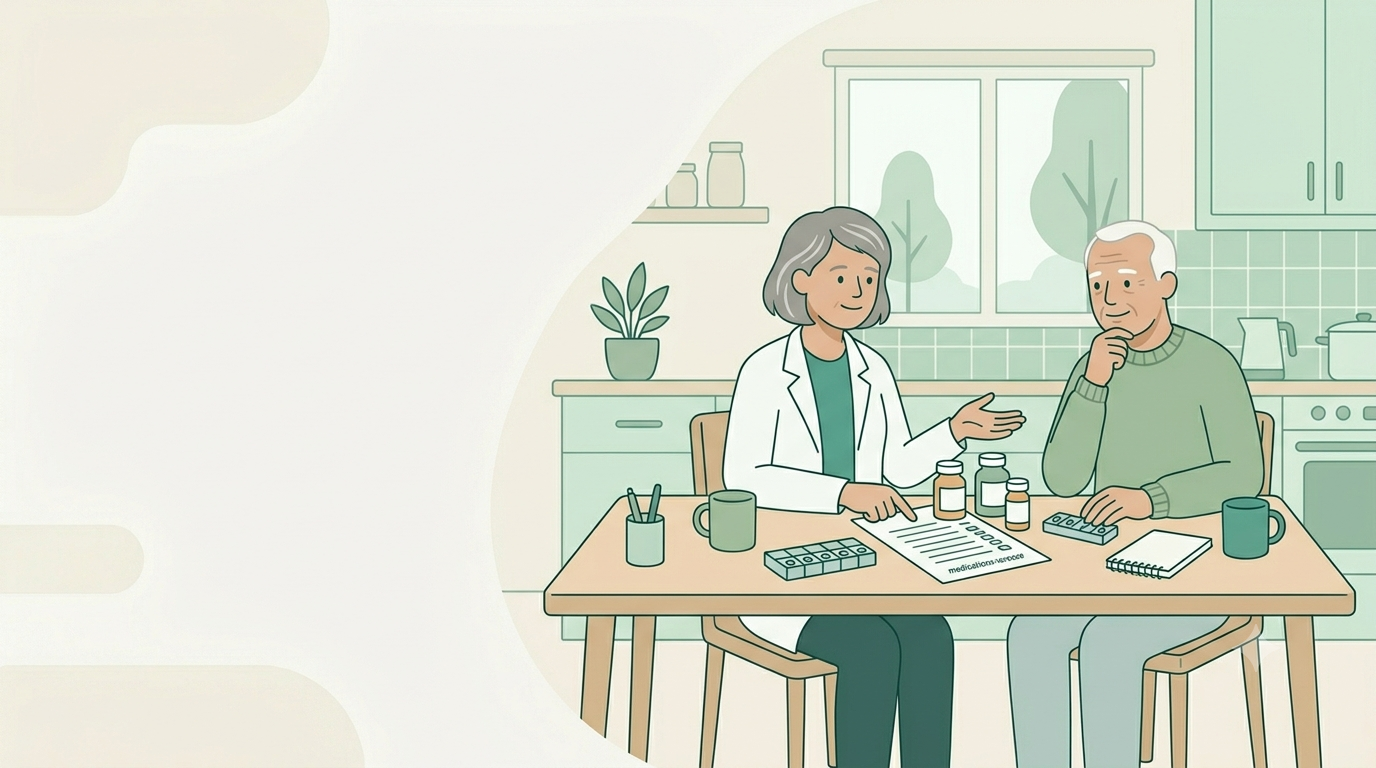
- Ask for a medication review. Bring the list to the doctor or pharmacist and ask directly: “Could any of these be increasing my parent’s risk of falling?” Pharmacists are especially accessible for this and often welcome the question.
- Mention the timing of falls. If falls began or worsened after a new medication started, or happen at particular times (after the morning pills, at night), tell the prescriber. This is a valuable clue.
- Ask about “deprescribing” — carefully. Sometimes a doctor can lower a dose, switch to a safer alternative, or gradually stop a drug that is no longer needed. This must always be done under medical supervision, never abruptly.
- Pair it with the proven basics. A medication review works best alongside balance exercise and a safer home — the combined approach the wider evidence supports.
What the evidence does not support
An honest caveat
This is the most important point in the whole article: do not stop or change any medication on your own. Many of these drugs treat serious conditions — depression, heart failure, chronic pain — and stopping them suddenly can be dangerous, sometimes more dangerous than the fall risk itself.
It is also worth being honest that the science has limits. While the link between these drugs and falls is well established, the evidence that simply removing them reliably prevents falls is actually mixed. Stopping a medication is not a guaranteed fix, and the right answer depends entirely on the individual. That is precisely why this is a decision for the prescriber, weighing the benefits of each drug against its risks — not a change to make at the kitchen table.
When to get professional help
If your parent takes any of the medications above and has fallen — or feels dizzy, drowsy, or unsteady — raise it with their doctor or pharmacist at the next opportunity. You do not need to wait for an annual review; a medication check can be requested any time, and is especially worth doing after any new drug is started or a dose changed.
Ask whether your parent’s medicines have been checked against recognised tools like the American Geriatrics Society’s Beers Criteria or the CDC’s STEADI medication guidance, which flag drugs that are often risky for older adults. A good prescriber will welcome the question.
Key takeaways
- Sedatives, sleeping pills, antidepressants, opioids, and diuretics are the medication groups most often linked to falls — with brain-acting (psychotropic) drugs carrying the strongest evidence.
- A medication review with a doctor or pharmacist is one of the most useful, actionable steps for a parent who is falling.
- Never stop a medication on your own — many treat serious conditions, and the evidence that simply removing them prevents falls is mixed. This is a decision for the prescriber.
Sources
- O’Reilly T, et al. Potentially inappropriate prescribing and falls-risk increasing drugs in people who have experienced a fall: a systematic review and meta-analysis. Age and Ageing, 2025. academic.oup.com
- Seppala LJ, et al. / World Guidelines for Falls Prevention. European position paper on polypharmacy and fall-risk-increasing drugs. European Geriatric Medicine, 2023. link.springer.com
- American Geriatrics Society. Beers Criteria for Potentially Inappropriate Medication Use in Older Adults. 2023.
- Centers for Disease Control and Prevention. STEADI — Medications Linked to Falls. cdc.gov/steadi
Medical disclaimer: This article is for general education and is written by a public health professional, not a physician or pharmacist. It is not medical advice. Never start, stop, or change a medication without consulting a qualified healthcare professional. Always seek personalized guidance for your parent’s situation.
Affiliate disclosure: HomeAgingGuide.com may earn a small commission if you buy a product through links on this site, at no extra cost to you. We only recommend products that fit the evidence; commissions never decide what we suggest.