Bathroom Safety Modifications for Seniors: What Actually Works
Last reviewed: August 2026 · Evidence tier: CDC Guideline · Sources: CDC (Stevens et al. 2011), Stevens et al. 2014 (Injury Epidemiology)
If you only fix one room in the home to prevent falls, make it the bathroom. Wet, hard surfaces, tight turns, and the awkward business of getting in and out of a tub combine into the single most dangerous room an older adult uses every day. If your parent has already fallen, here is what to do next.
The scale of it is worth being precise about, because the number you’ll see quoted online is usually wrong. A widely repeated claim says “80% of falls happen in the bathroom.” That is a garbled version of the real finding. In the CDC’s national study of bathroom injuries, an estimated 234,094 people were treated in emergency departments in 2008 for bathroom injuries, and 81.1% of those bathroom injuries were caused by falls, not 80% of all falls. The bathroom isn’t where most falls happen; it’s where falls are unusually likely to hurt you.
The same CDC study points at where in the bathroom it goes wrong: 37.3% of those injuries happened while bathing, showering, or getting out of the tub or shower, more than a third of the total, concentrated in one activity. That is the transfer, and it is why the advice below keeps returning to it.
One analysis of 783 falls inside the home found that a fall in the bathroom was more than twice as likely to cause injury as a fall in the living room, an odds ratio of 2.4 with a confidence interval of 1.2 to 4.9. That is the real reason to take this room seriously.
The good news is that the most effective changes are also among the cheapest. Here is what the evidence actually supports, roughly in order of value for money.
1. Grab bars: the single highest-value change
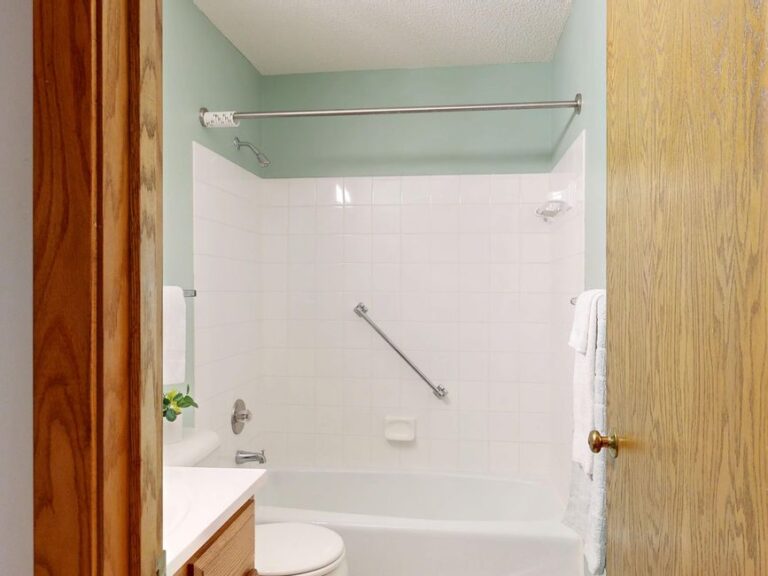
If you do nothing else, install grab bars. They are the most evidence-backed bathroom modification there is, and biomechanical research consistently shows they make getting in and out of the tub or shower measurably safer and help a person recover their balance when they start to slip.
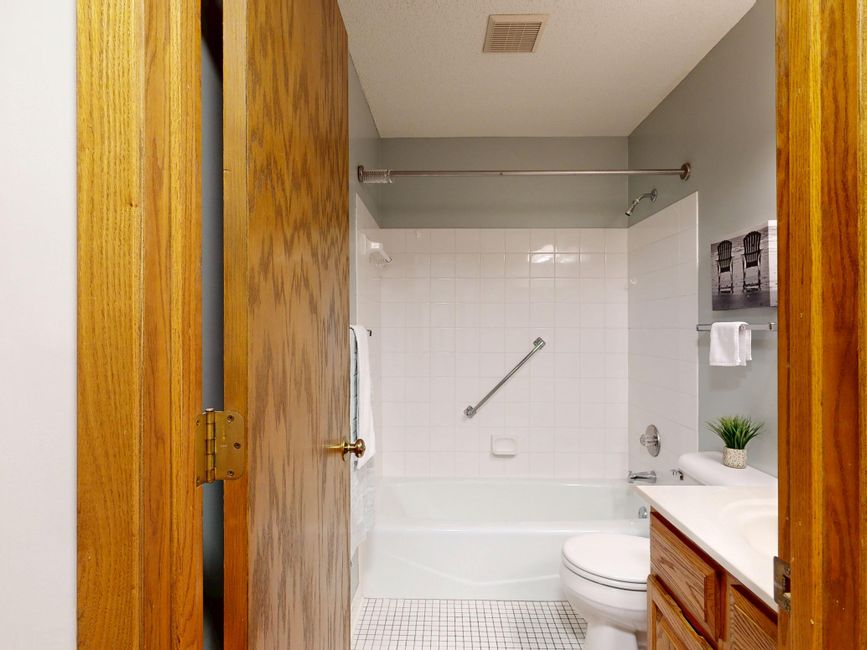
Three locations matter most: inside the shower or tub, just outside it where you step in and out, and beside the toilet. The single most dangerous moment in the bathroom is the transfer, stepping over a tub wall or lowering and raising yourself at the toilet, so put the bars where the transfers happen.
Two warnings that the people selling grab bars rarely mention. First, a grab bar is only as strong as what it’s screwed into. It must be anchored into wall studs or solid blocking, not just tile or drywall, or it can pull straight out under load, turning a safety device into a hazard. This is also why suction-cup grab bars can be so risky: suction holds nothing like a stud does. This is the one part of the job worth paying a handyman for if you’re not certain. Second, a towel rail is not a grab bar. Towel rails are designed to hold a towel, not a falling adult, and people grab them by reflex. Replace the one near the toilet or tub with a real grab bar.
2. Nonslip flooring and the rug problem
Most bathroom floors become skating rinks when wet. The fix is two-part: improve traction in the bathroom, and remove the loose mats people add thinking they’re helping.
Inside the tub or shower, use a textured rubber mat with strong suction cups, or have nonslip strips applied. On the floor itself, the loose bath mat is a classic trap: it slides on tile and bunches underfoot. Either remove it or replace it with one that has a nonslip backing that actually grips. The same goes for any decorative rug in the bathroom: a rug you can slide with your foot is a rug that can slide out from under you.
3. Lighting: cheap, overlooked, and genuinely protective
You cannot avoid a hazard you cannot see. Bathrooms are full of shadows, glare off wet surfaces, and dim corners, and the riskiest bathroom trip of all is the half-asleep one in the middle of the night.
Two inexpensive fixes do most of the work. Brighten the main light with a higher-output LED bulb so spills and edges are clearly visible. Then add a motion-activated night light that switches on automatically on the path from the bed to the toilet, so no one is feeling for a switch in the dark. This costs very little and removes one of the most common fall scenarios entirely.
4. A raised toilet seat or toilet safety frame
A standard toilet sits low, and lowering yourself onto it and standing back up is a balance-and-strength challenge that gets harder with age, arthritis, or weak knees. Two modest changes help: a raised toilet seat reduces how far you have to lower and lift yourself, and a toilet safety frame adds sturdy armrests on both sides to push up from. Both are inexpensive, and both target one of the specific moments the CDC research flagged as high-risk. For the full picture on choosing between them, see our guide to toilet safety: raised seats, frames and grab bars.
5. A shower seat and handheld showerhead
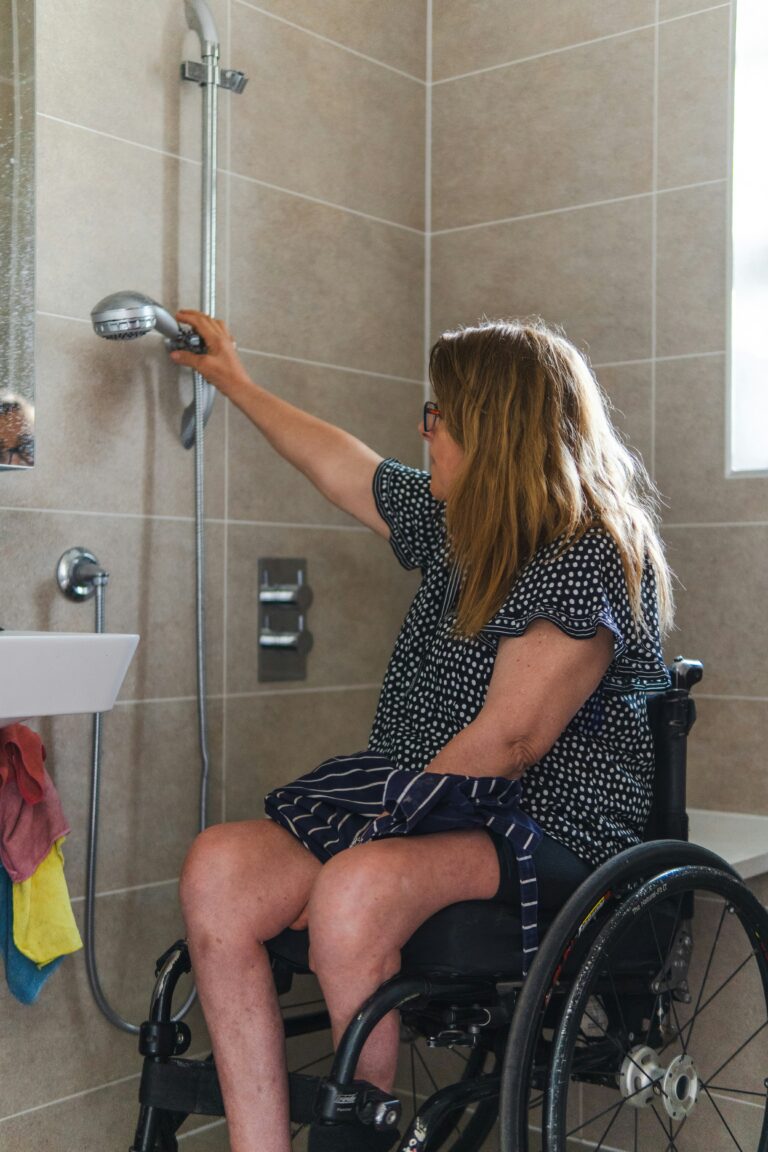
Standing on a wet surface for the length of a shower is tiring and precarious. A sturdy shower seat or bench lets a person bathe sitting down, and a handheld showerhead means they can rinse without standing, turning, and reaching. Together they remove a lot of the standing balance the shower normally demands. This pairing is one of the best-value upgrades short of rebuilding the shower.
When the bigger renovations are worth it
Everything above can be done for a few hundred dollars, mostly without construction. The large projects, a walk-in or curbless shower, or a walk-in tub, are a different decision, both in cost and in whether they’re the right answer for a given person. I have compared walk-in tubs against walk-in showers directly, and looked separately at whether walk-in tubs are worth it for most people. Those deserve their own analysis rather than an automatic yes, both in what these actually cost and in whether stepping over the tub wall is the specific problem, versus standing, balance, or something else.
Where to start this week
If this feels like a long list, do it in this order: grab bars at the tub and toilet, a night light on the path to the bathroom, and nonslip traction in the tub. Those three target the exact moments (the transfer, the dark walk, the wet surface) that cause the most injuries, and you can finish all three in an afternoon for very little money. The expensive renovations can wait until you know they’re solving the right problem.
This guide provides general educational information, not medical advice. For a personalized assessment, ask a doctor or an occupational therapist, who can evaluate the specific home and the person using it. If you are not sure where to start, your local Area Agency on Aging can help you find one.
How this site is funded: I do not currently earn a commission on anything mentioned here. If that changes I will say so on every page it applies to, and it will not change an assessment. Several articles on this site advise readers not to buy popular products, and that stays true whatever the funding.