Home Safety Checklist for Seniors
Most falls among older adults happen at home in the familiar rooms a person has navigated for years. This room-by-room home safety checklist, based on the CDC’s evidence-informed “Check for Safety” guide, walks you through the floors, stairs, bathroom, bedroom, and kitchen to find and fix the ordinary hazards that cause falls. Work through it once with your parent, fix what you can the same day, and plan the rest.
Why this matters
About one in four adults over 65 falls each year, and a fall once roughly doubles the chance of falling again. What surprises most families is where these falls happen: not on icy pavements or unfamiliar ground, but at home. A loose rug at the end of a hallway, a bathroom with nothing to hold, a path to the kitchen that is just slightly too dark at 2 am. These ordinary details become dangerous as balance, vision, and reaction time quietly change with age.
The encouraging part: home hazards are among the most fixable fall risks there are. A large Cochrane review found that reducing hazards in the home lowers the rate of falls with the biggest benefit for those already at higher risk. Many fixes cost little or nothing and take an afternoon.
How to use this checklist
Walk through the home room by room with your parent. For each item, mark it Done, Do soon, or Do now (for urgent hazards). Tip: walk the home once in low light or at night, since many hazards only reveal themselves in the conditions that actually cause falls.
Floors and walkways
- Clear all walking paths of papers, shoes, boxes, and clutter.
- Remove throw rugs, or secure them with double-sided tape or non-slip backing.
- Route electrical and phone cords along walls, never across walkways.
- Arrange furniture so there is a clear, wide path through every room.
- Make sure floor transitions between rooms are smooth and easy to see.
Stairs and steps
Handrails, lighting, and clear treads solve most stair hazards. If stairs remain the household’s biggest risk even after these fixes, a stair lift is worth considering: see our honest look at whether stair lifts are worth it.
- Keep stairs completely clear of objects at all times.
- Fix any loose, broken, or uneven steps.
- Ensure there is a light and a switch at both the top and bottom of the stairs (glow-in-the-dark switches help).
- Replace any burned-out stairway bulbs.
- Fit secure handrails on both sides of the stairs, running the full length.
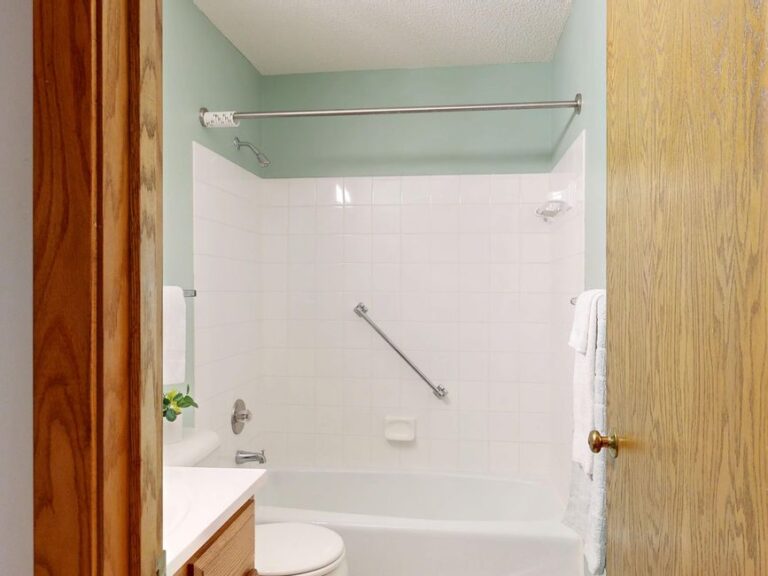
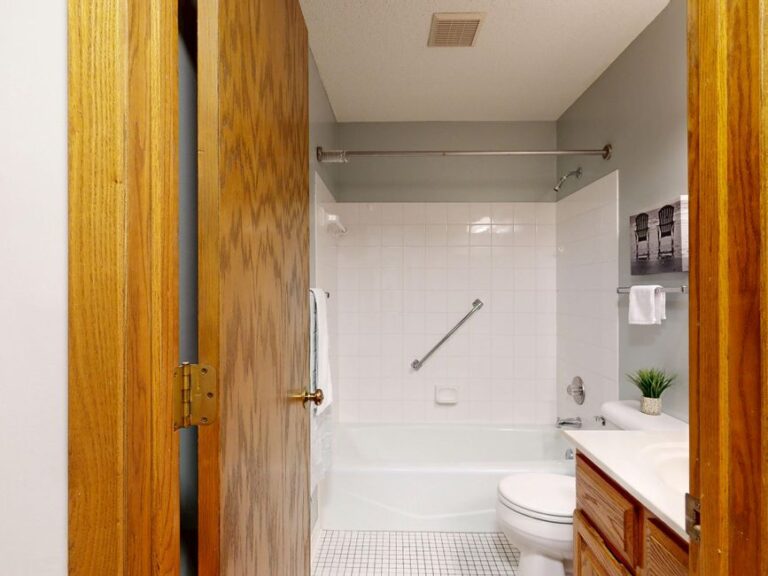
The bathroom is the highest-risk room
See our fuller guide to bathroom safety modifications that actually work for the evidence behind grab bars, nonslip surfaces, and walk-in showers.
- Put a non-slip rubber mat or self-stick strips on the tub or shower floor.
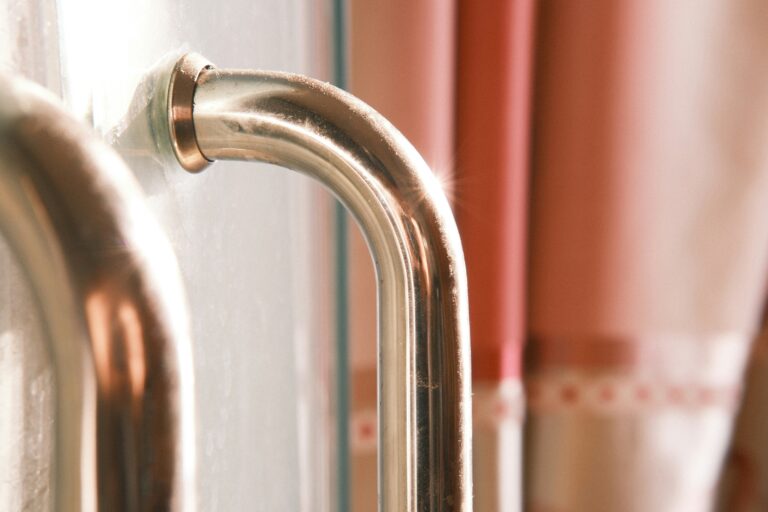
- Install grab bars inside the tub/shower and next to the toilet, anchored into wall studs, never relying on towel racks. Suction-cup bars are the common substitute this warning is really about: see are suction grab bars safe?
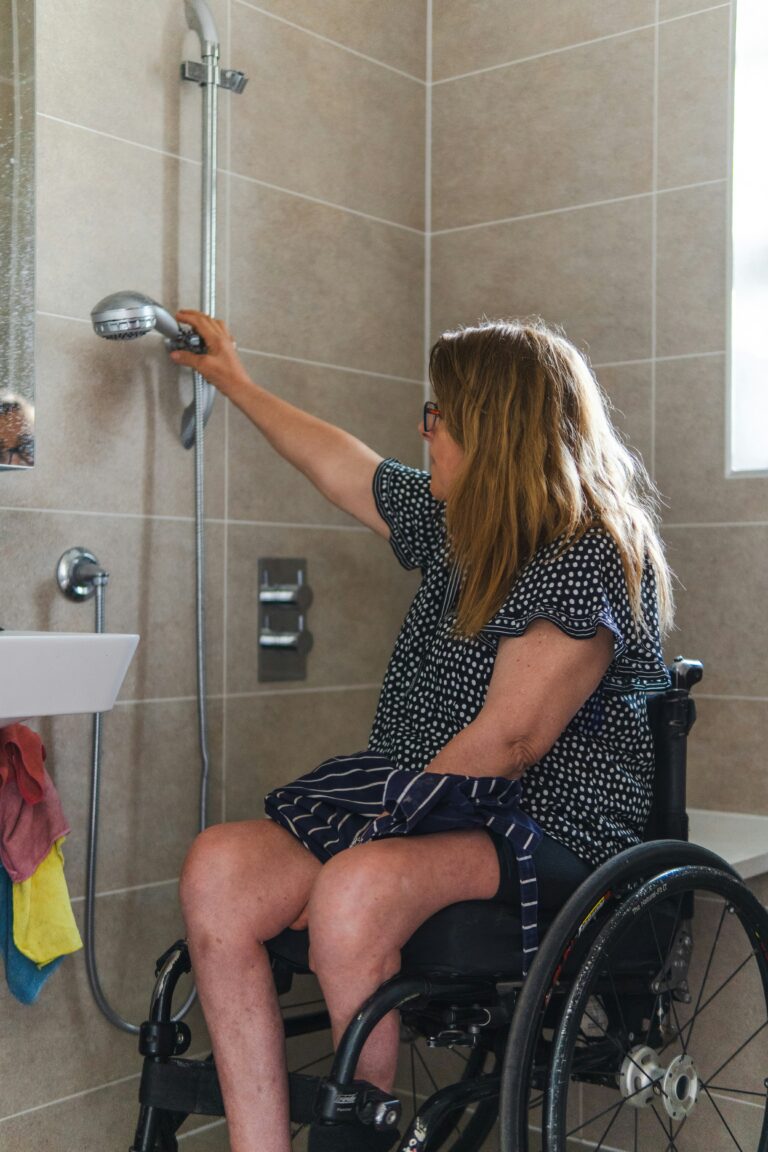
- Consider a shower seat and a handheld showerhead for seated bathing.
- Add a raised toilet seat if standing up is a struggle.
- Check the water heater temperature. The usual scald-prevention advice is 120°F, but that is not the whole picture: bacteria that cause Legionnaires’ disease grow in water below about 122°F, and CDC guidance for controlling Legionella recommends storing water above 140°F. The fix is a thermostatic mixing valve, which keeps the tank hot enough to suppress bacteria while still delivering safe water at the tap. This is a job for a plumber, not a dial to turn yourself.
- Make sure the bathroom is well lit, including at night.
Bedroom and the path to the bathroom
Many nighttime falls happen between the bed and the bathroom, when someone is half-asleep and the lighting is poor. This path deserves special attention: see our guide to nighttime bathroom falls for the specific causes and fixes.
- Place a lamp within easy reach of the bed.
- Install night lights along the route from the bed to the bathroom (motion-sensor ones are ideal).
- Keep a phone within reach of the bed. A medical alert device is the usual advice too, though the evidence for it is narrower than the advertising suggests: see what medical alert systems can and cannot do.
- Clear the bedroom floor and the path of any clutter or cords.
Kitchen
For a deeper room-by-room breakdown, see our guide to kitchen safety for older adults.
- Move everyday items to waist-to-shoulder height so there is no need to climb or stoop.
- If reaching high shelves is unavoidable, use a stable step stool with a bar to hold, never a chair.
- Wipe up spills immediately to avoid slippery floors.
- Ensure the kitchen is brightly and evenly lit.
Whole-home essentials
- Improve lighting everywhere: brighter bulbs, even lighting, and light added to dark corners.
- Encourage well-fitting, nonslip shoes worn indoors and out, not socks, loose slippers, or bare feet.
- Test smoke and carbon monoxide detectors on every floor.
- Encourage rising slowly after sitting or lying down, to avoid dizziness from blood-pressure drops, which are sometimes medication-related: see which everyday medications increase fall risk.
- Pair these home fixes with regular balance and strength exercise: the changes work best together.
What to fix first: a priority guide
| Priority | Typical cost | Examples |
|---|---|---|
| Do today (free or cheap) | $0–$50 | Clear clutter, remove/secure rugs, reroute cords, add night lights, brighter bulbs |
| Do soon (low cost) | $50–$300 | Nonslip mats, shower seat, raised toilet seat, reachers, stair treads |
| Plan and budget | $300+ | Professionally installed grab bars, handrails, stair lift, walk-in shower |
What the evidence does not support
An honest caveat
A checklist is a powerful start, but it has limits. The Cochrane evidence shows home modifications work best for people already at higher risk of falling, and they are most effective when tailored to the individual by a professional not just ticked off a generic list. For lower-risk older adults, home changes alone show less measurable benefit.
To put numbers on it: Cochrane found home hazard changes cut the rate of falls by 38% among people already at higher risk, rate ratio 0.62 with a 95% confidence interval of 0.56 to 0.70, rated high certainty. Among people not selected for fall risk, the same review found a rate ratio of 1.05, also high certainty, meaning no reduction at all. Cochrane’s own editorial goes further, saying these interventions need “certain elements of assessment and support to work, not just a short check list of things to tick off.” I am aware of the irony of quoting that in a checklist. It is the honest position, and it is why the last section of this article points you toward an occupational therapist.
And no checklist removes the underlying drivers of falls: muscle weakness, balance decline, medication side effects, poor vision. The strongest fall prevention combines a safer home with exercise, a medication review, and regular eye checks. Treat this list as one essential part of a bigger plan.
When to get professional help
For a tailored assessment, an occupational therapist can walk through the home, watch how your parent actually moves, and recommend the specific changes most likely to help: the approach with the strongest evidence. For installing grab bars, handrails, or larger modifications, use a handyman or a Certified Aging-in-Place Specialist (CAPS) who can anchor fittings safely. If your parent has already fallen, pair the home review with a medical fall-risk assessment from their doctor. If cost is a barrier, your local Area Agency on Aging can point you toward free or low-cost home safety programs.
Key takeaways
- Most falls happen at home; this room-by-room checklist (based on the CDC’s “Check for Safety”) helps you find and fix the common hazards.
- Start with the free and cheap fixes today clearing clutter, securing rugs, and improving lighting then plan grab bars and larger changes.
- Home changes work best tailored to the person and combined with exercise, a medication review, and eye checks, not as a standalone fix.
Sources
- Centers for Disease Control and Prevention, STEADI. Check for Safety: A Home Fall Prevention Checklist for Older Adults. cdc.gov/steadi
- Clemson L, Stark S, Pighills A, et al. Environmental interventions for preventing falls in older people living in the community. Cochrane Database of Systematic Reviews, 2023. cochranelibrary.com
- Centers for Disease Control and Prevention. Older Adult Falls Data. 2026. cdc.gov
Medical disclaimer: This article is for general education and is written by a public health professional, not a physician. It is not medical advice. Always seek personalized guidance for your parent’s situation.
How this site is funded: I do not currently earn a commission on anything mentioned here. If that changes I will say so on every page it applies to, and it will not change an assessment. Several articles on this site advise readers not to buy popular products, and that stays true whatever the funding.
Reviewed by Simon Peter Lokomo, MPH
Last reviewed: August 2026 · Evidence tier: Cochrane · Sources: CDC STEADI, Cochrane CD013258 (Clemson 2023)